Fuel prices always seem to rise when drivers least expect it. One week things feel manageable, and the next you’re noticing the cost creeping higher every time you visit the petrol station. With the cost of living already affecting households across the UK, many drivers are now looking for simple ways to reduce running costs wherever possible.
While people often think about driving less, switching routes, or even changing vehicles, one of the easiest ways to improve fuel efficiency is often overlooked. Tyre pressure plays a much bigger role in fuel consumption than many drivers realise, and even slightly under-inflated tyres can increase how much fuel your vehicle uses.
When fuel prices rise, even small inefficiencies become more expensive. A few pounds extra per tank may not sound like much, but over weeks and months, the cost can quickly add up. The good news is that checking and maintaining the correct tyre pressure is quick, simple, and can make a noticeable difference.
As fuel prices continue to fluctuate, paying attention to tyre pressure could help reduce fuel costs, improve safety, and extend the life of your tyres at the same time.
Table of Contents
ToggleWhy Tyre Pressure Matters More When Fuel Prices Rise
Tyre pressure directly affects how your vehicle interacts with the road. When tyres are under-inflated, more of the tyre surface touches the road, which increases rolling resistance. This means your engine has to work harder to move the vehicle forward.
When fuel prices are low, this extra effort may go unnoticed. However, when fuel costs increase, even small changes in efficiency become more noticeable. Drivers may find themselves filling up more frequently without realising that tyre pressure could be a contributing factor.
Under-inflated tyres create additional drag, which means your vehicle requires more energy to maintain speed. This is especially noticeable during motorway driving, where maintaining steady speed is important for fuel efficiency. Even in urban driving conditions, increased rolling resistance can lead to higher fuel consumption over time.
Keeping tyres at the correct pressure allows your vehicle to roll more efficiently, reducing strain on the engine and helping improve fuel economy. When fuel prices are rising, this simple check becomes even more important.
How Low Tyre Pressure Increases Fuel Usage
Low tyre pressure increases fuel consumption by making your vehicle less efficient. When tyres are under-inflated, the shape of the tyre changes slightly, increasing the surface area in contact with the road. This creates more friction and resistance.
Because of this increased resistance, your engine must work harder to move the vehicle forward. This additional effort results in higher fuel consumption. Over time, this can noticeably impact your fuel costs.
Studies suggest that under-inflated tyres can increase fuel consumption by around 3–5 percent. While this may seem small, it can become significant when fuel prices are already high.
This effect can be even more noticeable for drivers who:
- Commute long distances
- Drive regularly on motorways
- Carry heavy loads
- Use their vehicle for work
Over longer journeys, low tyre pressure can lead to more frequent fuel stops and increased running costs. Keeping tyres properly inflated helps your vehicle operate more efficiently and can reduce unnecessary fuel usage.
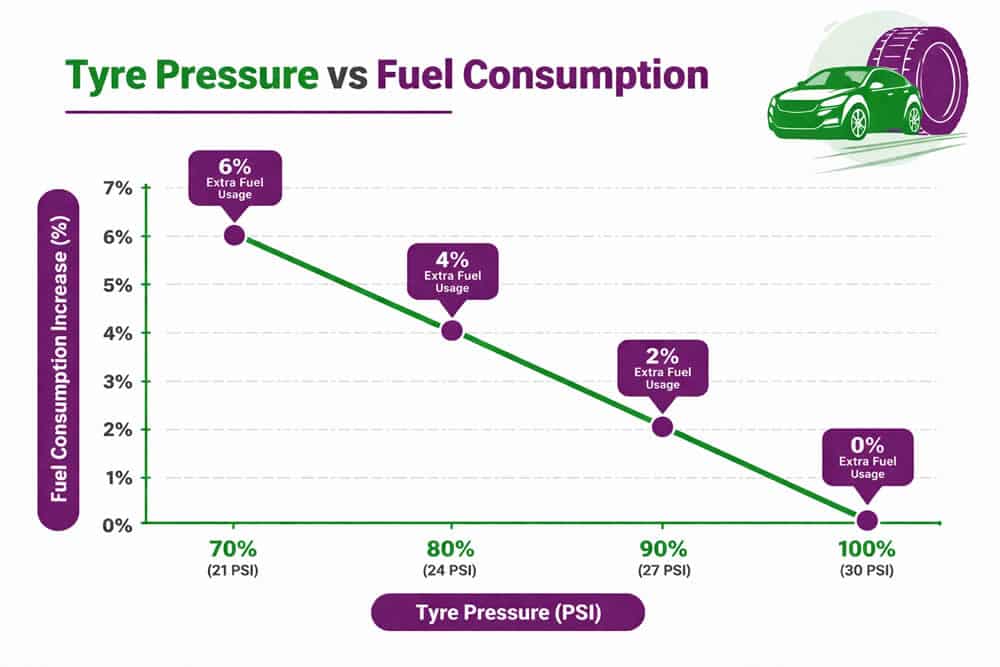
How Much Low Tyre Pressure Could Be Costing You
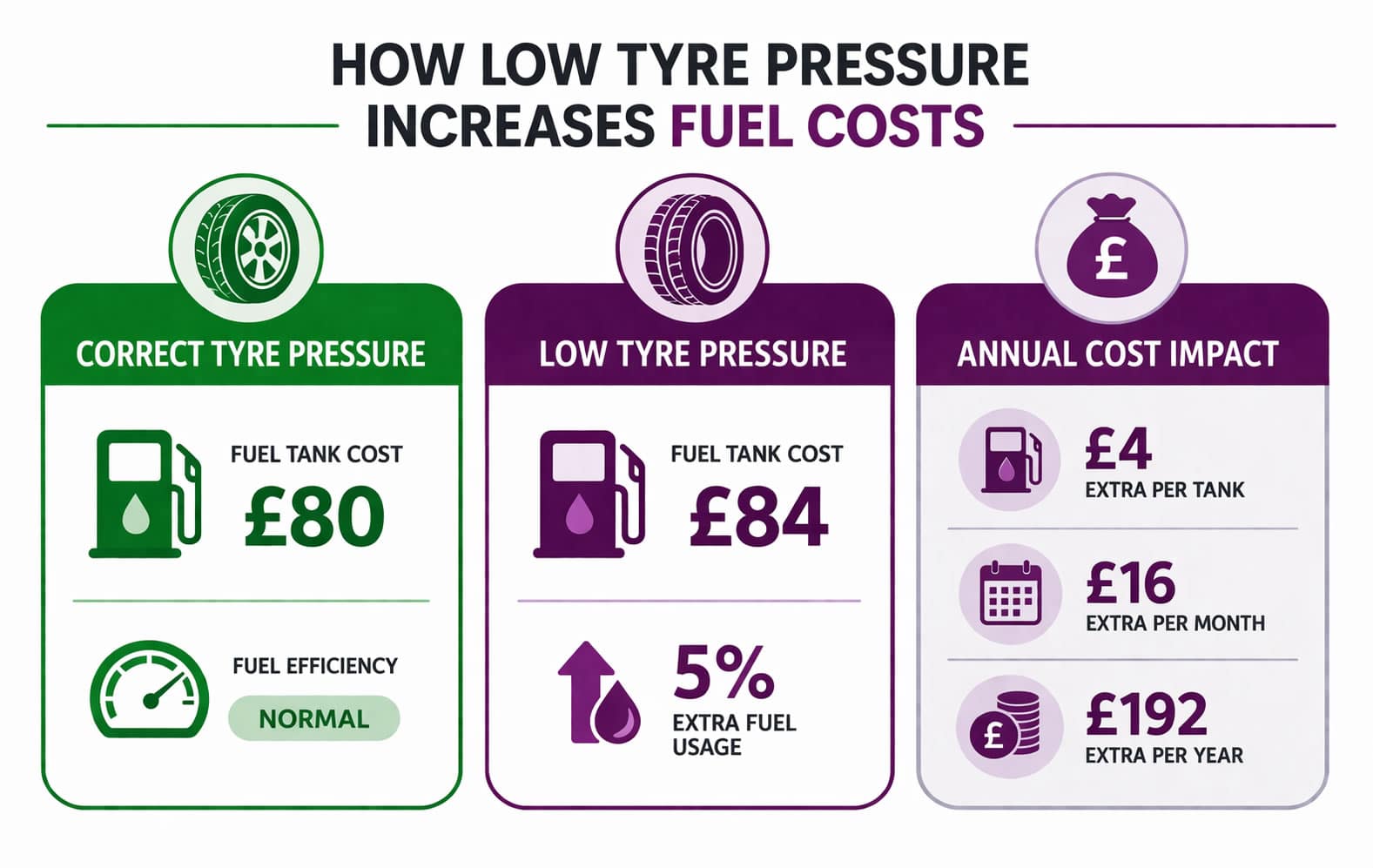
When fuel prices rise, even small increases in consumption can quickly become noticeable. For example, if filling your vehicle costs £80 and low tyre pressure increases fuel consumption by just 5 percent, you could be spending an extra £4 per tank.
If you fill up once per week, this could mean:
- Around £16 extra per month
- Nearly £200 extra per year
This example becomes even more significant for drivers who travel frequently or use their vehicle for work. Delivery drivers, commuters, and long-distance drivers may experience even higher additional costs.
Over time, this unnecessary expense adds up. Many drivers look for ways to reduce fuel costs, but tyre pressure is often overlooked because the difference is gradual rather than immediate.
Regular tyre pressure checks can help reduce fuel usage and keep running costs under control, particularly during periods of rising fuel prices.
Signs Your Tyre Pressure May Be Too Low
Low tyre pressure does not always produce obvious symptoms. In many cases, pressure drops slowly over time, making it difficult to notice changes while driving. However, there are some common signs that may indicate your tyres are under-inflated.
These include:
- Steering feels heavier than usual
- Reduced fuel efficiency
- Tyres appear slightly flat
- Uneven tyre wear
- Slower acceleration
- Warning light on dashboard
Many modern vehicles include tyre pressure monitoring systems, but not all vehicles have this feature. Even if your vehicle does include warning systems, it is still recommended to check tyre pressure manually on a regular basis.
Slow air loss can occur naturally over time, particularly with temperature changes or minor tyre wear. Checking tyre pressure regularly helps prevent issues before they impact fuel efficiency or safety.
How Often Should You Check Your Tyre Pressure?
Tyre pressure should ideally be checked at least once per month. This helps ensure tyres remain at the correct pressure and reduces the risk of increased fuel consumption.
You should also check tyre pressure:
- Before long journeys
- After significant temperature changes
- Before holidays or road trips
- When carrying heavier loads
Temperature changes can affect tyre pressure more than many drivers realise. Cold weather can reduce tyre pressure, while warmer temperatures can increase it slightly. Seasonal changes can therefore cause gradual pressure loss.
Checking tyre pressure regularly becomes even more important when fuel prices rise. Maintaining correct pressure helps improve fuel efficiency and reduce unnecessary costs.
Where To Find The Correct Tyre Pressure
Finding the correct tyre pressure for your vehicle is simple. Most manufacturers provide this information in several locations.
You can usually find the recommended tyre pressure:
- Inside the driver door frame
- Inside the fuel cap
- In the vehicle handbook
- On the manufacturer website
It is important to follow the manufacturer’s recommendations rather than guessing. Different vehicles require different tyre pressures depending on weight, design, and performance.
Some vehicles also include different tyre pressure recommendations for:
- Front tyres
- Rear tyres
- Loaded vehicles
- Motorway driving
Using the correct tyre pressure helps ensure the best balance between fuel efficiency, safety, and tyre lifespan.
Why Overinflating Tyres Isn’t The Answer
While under-inflated tyres increase fuel consumption, overinflating tyres is not recommended either. Some drivers believe that higher tyre pressure automatically improves fuel efficiency, but this can create other problems.
Overinflated tyres can:
- Reduce grip on the road
- Increase braking distance
- Cause uneven tyre wear
- Reduce comfort while driving
Overinflating tyres may reduce rolling resistance slightly, but the safety risks often outweigh any potential benefits. The best approach is always to use the recommended tyre pressure provided by the manufacturer.
Maintaining correct tyre pressure ensures both fuel efficiency and safe driving conditions.
How Temperature Changes Affect Tyre Pressure
Temperature changes have a direct effect on tyre pressure. As temperatures drop, tyre pressure naturally decreases. This means tyres that were correctly inflated during warmer weather may become under-inflated when temperatures fall.
As a general rule, tyre pressure can change by around 1 PSI for every 10°C change in temperature. This means seasonal changes can have a noticeable impact.
Spring and autumn often bring fluctuating temperatures, which can lead to gradual pressure changes. Early mornings can also produce lower tyre pressure readings compared to warmer afternoons.
Checking tyre pressure during seasonal transitions helps maintain consistent fuel efficiency and safe driving performance.
Other Tyre Issues That Increase Fuel Consumption
Tyre pressure is not the only factor that affects fuel efficiency. Other tyre-related issues can also increase fuel consumption.
These include:
- Worn tyres
- Incorrect wheel alignment
- Unbalanced wheels
- Incorrect tyre size
- Poor quality tyres
Each of these issues can increase rolling resistance and reduce fuel efficiency. Over time, this leads to higher fuel consumption and increased running costs.
Regular tyre checks help identify these issues early and maintain better vehicle efficiency.
Simple Tyre Pressure Check Guide
Checking tyre pressure is quick and straightforward. Following a simple routine can help maintain efficiency and safety.
Steps to check tyre pressure:
- Check tyres when cold
- Use a reliable pressure gauge
- Compare to manufacturer recommendations
- Inflate if needed
- Recheck after inflating
This simple process usually takes only a few minutes and can help improve fuel efficiency. Regular checks help reduce fuel costs and improve tyre lifespan.
Why Proper Tyre Pressure Also Improves Safety
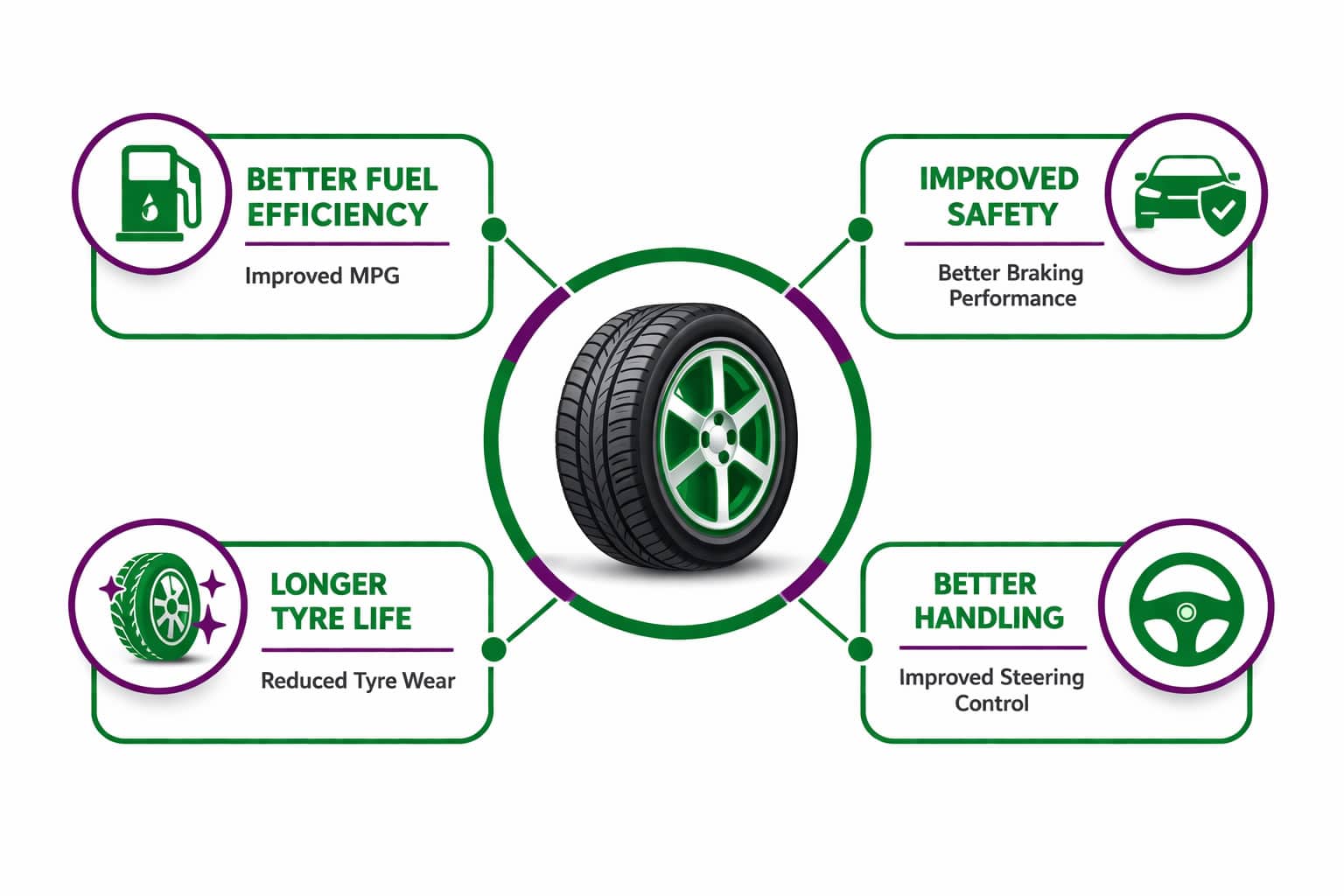
Maintaining correct tyre pressure improves more than just fuel efficiency. It also plays an important role in safety.
Correct tyre pressure helps:
- Improve braking performance
- Improve handling
- Reduce tyre wear
- Reduce blowout risk
Under-inflated tyres can overheat more easily, especially during long journeys. This increases the risk of tyre damage or failure.
Maintaining proper tyre pressure helps keep your vehicle running safely and efficiently.
Our Final Say!
As fuel prices continue to rise, many drivers are looking for practical ways to reduce running costs. While there are many factors that affect fuel consumption, tyre pressure remains one of the simplest and most effective ways to improve efficiency.
Low tyre pressure increases rolling resistance, forcing your engine to work harder and consume more fuel. Over time, this can add unnecessary costs, particularly during periods of rising fuel prices.
Regular tyre pressure checks are quick, simple, and can help improve both fuel economy and safety. By maintaining the correct tyre pressure, drivers can reduce fuel consumption, extend tyre lifespan, and enjoy a smoother driving experience.
With fuel prices remaining unpredictable, checking tyre pressure is one small step that can make a noticeable difference.